Here’s a full article draft you can use:
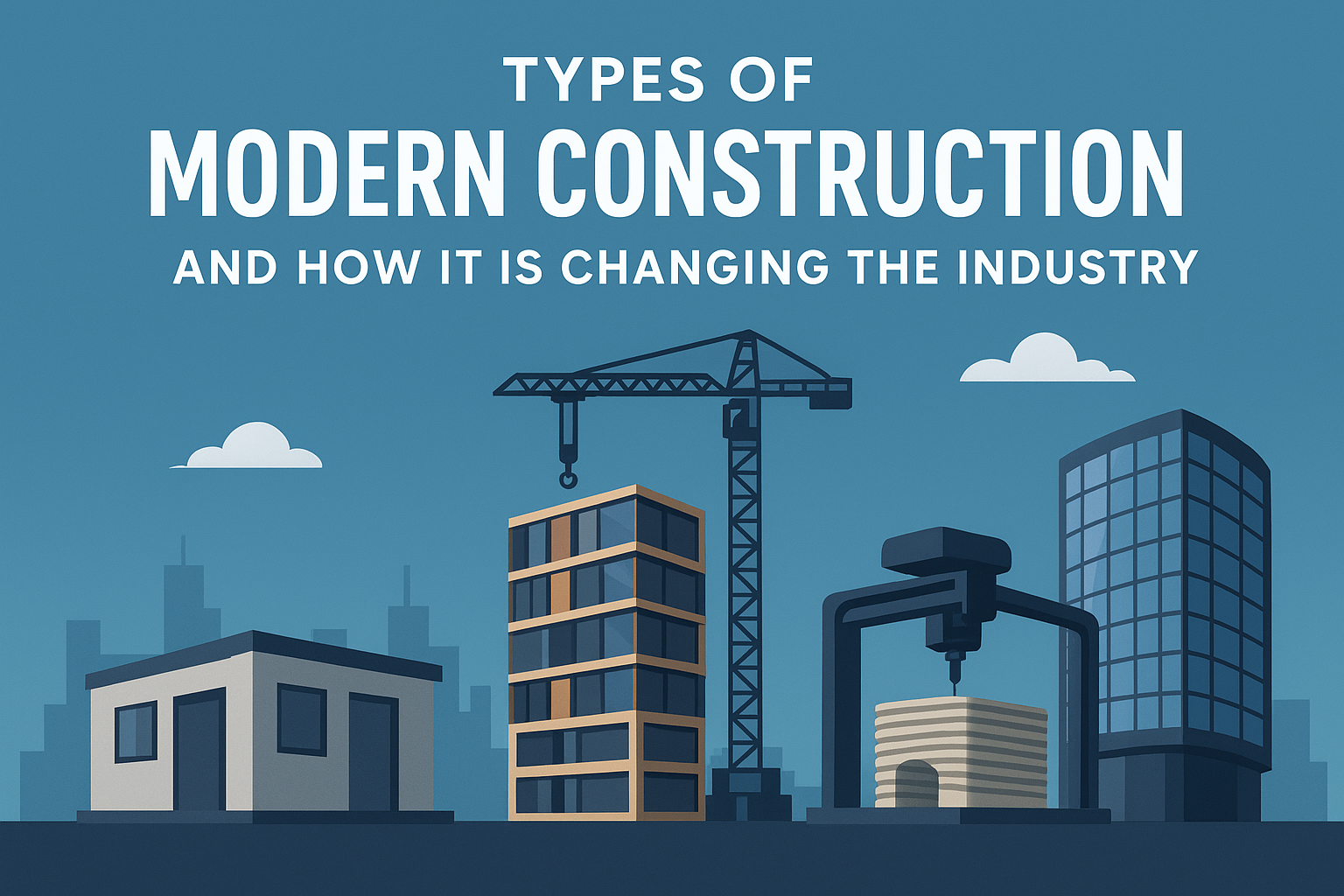
Modern Construction Techniques That Are Transforming Real Estate
The construction industry has always been the backbone of human development. From ancient stone structures to today’s skyscrapers and smart homes, construction methods have evolved significantly. In the modern era, rapid urbanization, sustainability goals, and technological innovation are reshaping how buildings are designed, constructed, and maintained.
1. Prefabricated and Modular Construction
Prefabrication involves manufacturing building components in a factory and assembling them on-site. Modular construction goes one step further, creating entire sections (modules) that can be stacked or connected like building blocks.
Why it matters:
- Reduces construction time by up to 50%
- Minimizes material wastage
- Improves quality control with factory precision
2. Green and Sustainable Construction
Sustainability is no longer optional. Modern construction emphasizes eco-friendly practices, such as using recycled materials, renewable energy systems, and designs that reduce carbon footprints.
Key elements include:
- Solar panels and green roofs
- Energy-efficient insulation and smart windows
- Water harvesting and low-flow fixtures
3. Smart Construction and IoT Integration
Smart technology is transforming buildings into intelligent ecosystems. From homes to commercial spaces, IoT (Internet of Things) allows automation and monitoring.
Examples include:
- Smart HVAC systems that save energy
- Sensors that track structural health
- Automated lighting and security systems
4. 3D Printing in Construction
3D printing is no longer limited to prototypes—it is now building houses. Large-scale 3D printers use concrete, plastics, or even recycled materials to create walls and structures quickly.
Benefits:
- Faster construction at lower costs
- Customized designs
- Potential to address housing shortages
5. Steel and Glass Architecture
Contemporary architecture often highlights aesthetics as much as function. Steel and glass buildings are becoming the face of modern cities.
Advantages:
- Strong yet lightweight structures
- Flexibility in design
- Modern, sleek appearance
6. Hybrid and Adaptive Reuse Construction
Instead of demolishing old buildings, adaptive reuse gives them a new purpose. Warehouses become offices, factories become apartments, and heritage sites are preserved with modern functionality.
Why it’s important:
- Reduces demolition waste
- Preserves cultural heritage
- Meets sustainability goals
How Modern Construction is Changing the Industry
- Speed and Efficiency: Prefabrication, 3D printing, and modular techniques are cutting project timelines drastically.
- Sustainability: Green building certifications (LEED, BREEAM) are pushing companies to adopt eco-conscious methods.
- Technology Integration: AI, drones, and BIM (Building Information Modeling) are revolutionizing planning and project management.
- Customization: Clients can now demand unique, cost-effective, and smart living spaces.
- Global Impact: These innovations are addressing urban housing shortages, disaster relief needs, and infrastructure demands worldwide.
Conclusion
Modern construction is no longer just about laying bricks and pouring concrete—it’s about building smarter, faster, and greener. As technology continues to advance, the future of construction will focus on adaptability, sustainability, and efficiency, shaping the cities and communities of tomorrow.
Would you like me to make this article more professional (magazine-style) or simpler and engaging (social media/blog style)?